
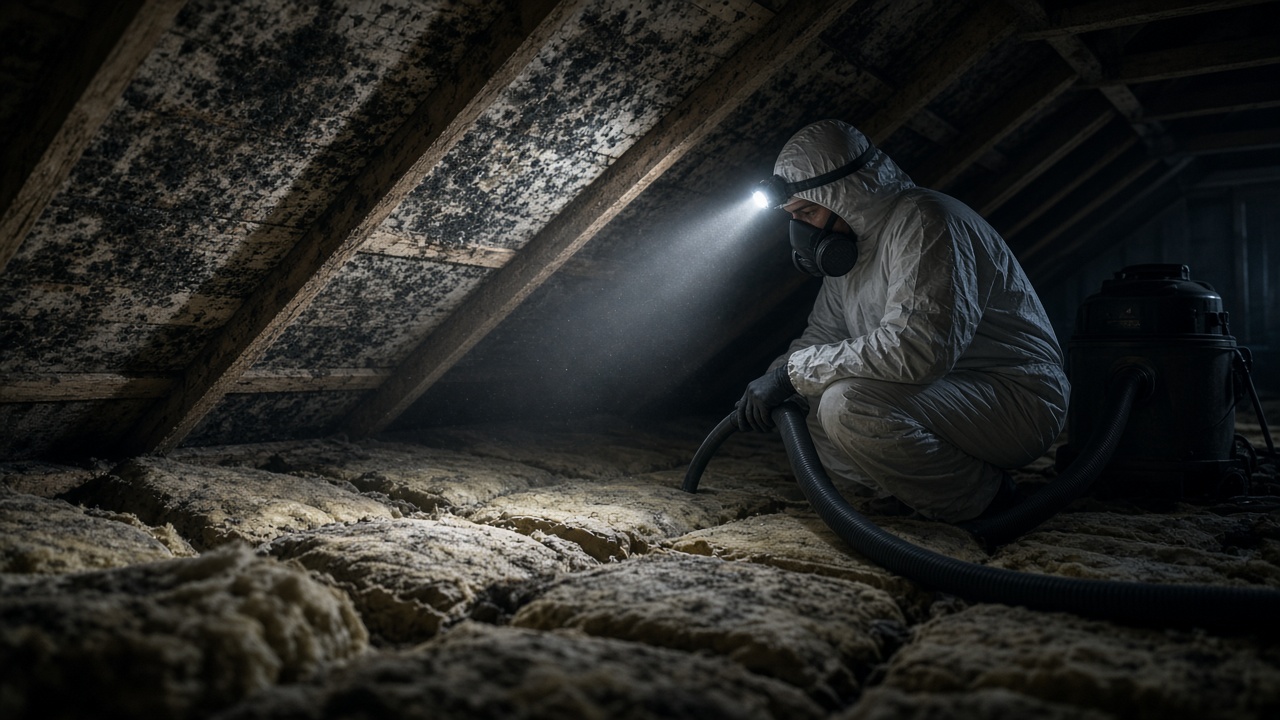
El Paso County · Residential · Attic mold specialists
Colorado Springs Residential Attic Mold Removal
Attic mold spreads fast in Colorado Springs—we stop it before it reaches your living spaces.
Attic Mold Removal Process in Colorado Springs
Attic mold often goes unnoticed until it's advanced. You might catch a musty smell, see dark spots on roof decking, or find wet insulation after a hard freeze followed by warm days—common cycles here in the Pikes Peak region. By the time you realize there's a problem, mold can already be affecting indoor air quality and weakening structural materials. We address it quickly because waiting puts your family's health and your home's integrity at risk.
We start with a complete attic inspection to map the extent of mold, identify moisture sources (roof leaks, condensation, poor ventilation), and assess insulation damage. From homes in Briargate to properties near Powers Boulevard and Academy Boulevard, we've seen how Front Range freeze-thaw cycles and Colorado Springs' seasonal humidity create ideal conditions for mold growth. Our team documents everything so you understand the scope and what needs to happen next.
Remediation includes containment to prevent spore spread, removal of affected insulation and materials, targeted mold treatment, and repair of the moisture source. We coordinate with roofers or HVAC specialists as needed, often working around your family's schedule. Once mold is gone, we restore insulation and ventilation so your attic stays dry and your heating and cooling efficiency returns to normal.
Dispatch & Field Operations for Colorado Springs
How Restoration King manages attic mold from roof leaks, insulation, and poor ventilation for homes across Colorado Springs and El Paso County.
- Full attic inspection with: moisture mapping and thermal imaging
- Containment and protection of: living spaces during remediation
- Colorado Springs Headquarters: Emergency crews dispatch from our Colorado Springs headquarters (view on Google Maps) — serving homes from Briargate to Broadmoor and Rockrimmon.
First-Hour Attic Mold Removal Inspection in Colorado Springs Homes
We inspect attics using visual assessment, moisture meters, and thermal imaging to identify mold hotspots and hidden moisture sources. In El Paso County homes, we look for roof penetrations, gutter backups, blocked soffit vents, and condensation points—all common culprits. We also check insulation type and condition, because wet or missing insulation loses R-value and traps moisture.
Our inspection report details what we found, where moisture is entering, and what caused it. Whether your Rockrimmon or Old Colorado City home has an older roof, poor attic ventilation, or recent water damage, we give you a clear plan before any remediation work begins. This helps landlords and homeowners alike make informed decisions and understand costs upfront.
Use this checklist to spot potential attic mold and moisture problems in your Colorado Springs home.
- Check for visible dark spots, fuzzy growth, or discoloration on roof decking and rafters
- Smell for musty odors—often the first sign before visible mold appears
- Look for wet, damp, or crumbly insulation
- Inspect soffit vents and gable vents for blockages or damage
- Check roof for missing shingles, cracks, or penetrations (plumbing vents, chimneys)
- Look for water stains on roof framing or sheathing
- Feel for condensation or moisture on metal ducts and pipes
- Verify gutters and downspouts are clear and draining away from the home
- Check that attic ventilation is adequate (should feel air movement in summer)
- Look for ice dams or icicles along eaves in winter—sign of heat and moisture escape
- Note any recent water intrusions or roof leaks inside the home
- Check attic access for air leaks from living spaces below (heat and humidity rise)
If you spot any of these signs, call us for a professional inspection. Attic mold doesn't improve on its own—moisture and temperature make it worse.
What's Included in Residential Attic Mold Removal
- Full attic inspection with moisture mapping and thermal imaging
- Containment and protection of living spaces during remediation
- Removal of mold-affected insulation and materials
- IICRC-trained mold treatment and cleanup
- Identification and documentation of moisture sources
- Post-remediation inspection to confirm mold is gone
- Recommendations for attic ventilation and moisture prevention
We handle the entire job so you don't have to enter a contaminated attic or worry about incomplete cleanup. After we finish, your attic is safe and dry.
Signs You Need Attic Mold Removal in Colorado Springs
Colorado Springs homeowners often discover attic mold after winter thaw or following roof leaks that go unnoticed for weeks. If you spot any of these warning signs, contact us for an attic inspection right away.
- Musty, earthy odor coming from your attic or upper floors
- Dark spots or fuzzy growth visible on roof decking, joists, or insulation
- Recent roof leak or water staining on attic framing
- Soft, deteriorating insulation or water-damaged roof sheathing
- Allergy symptoms or respiratory irritation that worsens in certain rooms
- Visible condensation or moisture on attic windows or vents during cold months
- History of ice damming or gutter backup on your roofline
Why Colorado Springs Homes Need Attic Mold Removal
The Pikes Peak region's freeze-thaw cycle is brutal on roof structures. Winter moisture enters through compromised shingles or flashing, then thaws into your attic cavity during spring warming. This repeated cycle, combined with Front Range dust infiltration and inconsistent ventilation, creates ideal conditions for mold growth in attics across neighborhoods like Briargate, Rockrimmon, and the Broadmoor area. Military families and long-time residents along Academy Boulevard and Powers Boulevard know this cycle well.
Colorado Springs homes often suffer from poor attic ventilation that traps moisture year-round. When warm, moist interior air meets cold attic surfaces during winter, condensation forms on insulation, joists, and plywood. The Pikes Peak climate accelerates this problem—our low humidity outside contrasts sharply with heated indoor air, and inadequate soffit or ridge venting allows moisture to linger. Mold colonizes damp insulation rapidly, compromising both your home's energy efficiency and air quality.
Many Colorado Springs homeowners discover attic mold only after a roof leak or inspection reveals hidden damage to framing and decking. Once mold takes hold in your attic, it spreads into insulation batts and can eventually affect the structural integrity of rafters and trusses. Quick identification and professional removal prevent spores from spreading into living spaces below and protect your investment in Old Colorado City, Briargate, or any El Paso County neighborhood.
What to Expect During Attic Mold Removal in Colorado Springs
Your attic mold removal visit typically takes 2 to 4 hours, depending on the size of your attic and extent of contamination. Our IICRC-trained crew will assess the mold location, moisture source, and affected materials before beginning any removal work. We prioritize identifying and isolating the problem—whether it stems from roof leaks, condensation buildup, or ventilation issues—so we address the root cause, not just the visible mold.
After removal, we discuss ventilation improvements and moisture barriers that suit Colorado Springs' specific climate challenges. If roof or flashing damage is the culprit, we can coordinate with your roofing contractor or recommend trusted local partners. Our goal is to leave your attic clean, dry, and properly ventilated to prevent recurrence.
- Arrival and attic walkthrough: We inspect the full attic space, document moisture and mold locations, and identify the moisture source.
- Containment and ventilation setup: We establish work zones and ensure proper air flow to prevent spore spread into occupied areas.
- Mold removal: We carefully remove contaminated insulation, treat affected framing with appropriate solutions, and clear dust and debris.
- Verification and recommendations: We confirm remediation is complete and discuss ventilation, flashing, or insulation upgrades tailored to your Colorado Springs home.
- Final walkthrough and documentation: We review completed work with you and provide documentation for your records.
Related Attic Mold Removal Situations in Colorado Springs
Mold Removal & Remediation
Containment and removal when moisture turns into mold.
Water Damage Restoration
Stop the water and dry the structure before secondary damage.
Air Duct Cleaning
Reduce dust that resettles after cleaning day.
Odor Removal
Neutralize smoke, sewage, pet, and musty odors at the source.
Residential Attic Mold Removal Guides for Colorado Springs Homes
Practical articles that answer follow-up questions about residential attic mold removal in Colorado Springs.
Colorado Springs Residential Attic Mold Removal FAQ
How do I know if I have attic mold?
Common signs are musty smells coming from the attic, visible dark spots or fuzzy growth on roof decking, wet or crumbly insulation, and water stains on framing. Many Colorado Springs homeowners don't find it until they enter the attic to check something else. If you suspect mold, call us for a professional inspection rather than poking around yourself—mold spores can spread if disturbed.
What causes attic mold in Colorado Springs?
Roof leaks from missing shingles or ice dam damage are the biggest culprit. Poor attic ventilation traps warm, moist air in winter, which condenses when it hits cold roof decking. Front Range freeze-thaw cycles and our seasonal humidity patterns make attics vulnerable. Blocked soffit or gable vents and inadequate insulation also contribute. We identify the source so it doesn't come back.
Is attic mold dangerous to my family?
Attic mold can release spores into your home's air if it's near ductwork or there are air leaks between the attic and living spaces. Some people experience respiratory symptoms, allergies, or asthma triggers. Even if you don't notice health effects immediately, mold damages insulation and framing over time. We recommend prompt removal to protect your family and home.
Can I remove attic mold myself?
We don't recommend it. Disturbing mold spreads spores throughout your home and attic. You also need proper containment, respiratory protection, and disposal procedures. Professional remediation ensures the job is done safely and completely. Plus, if you don't fix the moisture source, mold comes back. Let us handle it so you stay safe.
How long does attic mold removal take?
Most jobs take 1–3 days, depending on how much mold is present and whether we need to repair roof leaks or ventilation. We'll give you a timeline after the inspection. We work around your schedule and coordinate with roofers or contractors if needed. Call (719) 282-0997 to discuss your home's specific situation.
Do you serve my area? (Briargate, Broadmoor, Rockrimmon, etc.)
Yes. We serve Colorado Springs and El Paso County, including Briargate, Broadmoor, Rockrimmon, Old Colorado City, and neighborhoods along I-25, Academy Boulevard, Powers Boulevard, and Platte Avenue. If you're not sure whether we cover your address, call us at (719) 282-0997 to confirm.
Nearby Communities We Serve for Attic Mold Removal
- Residential Attic Mold Removal in Fountain
- Residential Attic Mold Removal in Security-Widefield
- Residential Attic Mold Removal in Stratmoor
- Residential Attic Mold Removal in Fort Carson
- Residential Attic Mold Removal in Monument
- Residential Attic Mold Removal in Falcon
- Residential Attic Mold Removal in Peyton
- Residential Attic Mold Removal in Rockrimmon
Restoration King — Colorado Springs
Serving El Paso County and nearby Front Range communities.
Need Residential Attic Mold Removal in Colorado Springs?
Call Restoration King today for a free attic inspection and moisture assessment. We'll tell you exactly what we find and what it costs to fix. (719) 282-0997.