
El Paso County · Residential · Always on call
Colorado Springs Residential 24/7 Emergency Response
Water doesn't wait for business hours—we answer emergencies in Colorado Springs 24/7.
How We Respond When Your Home Needs Help
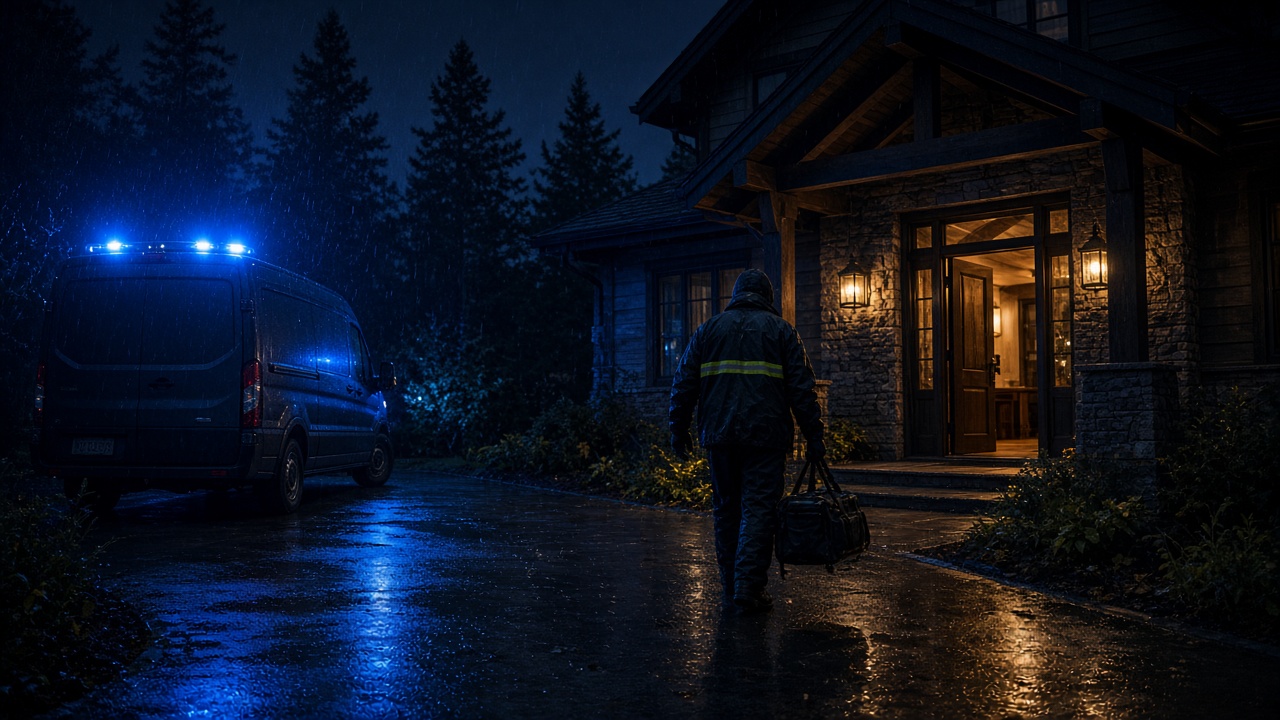
A burst pipe at midnight, a basement flood after heavy snow, or a fire that leaves your family displaced—these don't happen during office hours. When disaster strikes your Colorado Springs home, you need someone who picks up the phone immediately and knows how to stabilize the damage before it spreads. We staff our emergency line around the clock because homeowners and renters in the Pikes Peak region face everything from freeze-thaw damage to summer cloudbursts, and waiting until Monday can mean the difference between a fixable problem and a total loss.
When you call (719) 282-0997, we dispatch a team as quickly as possible. If you're on the south side near the Broadmoor or north toward Briargate, travel times are short. We arrive with extraction equipment, drying fans, and the training to stop water migration, prevent mold growth, and assess structural damage on the spot. Our crews are IICRC-trained and ready to document what happened for your insurance claim—something most DIY attempts miss entirely.
We also handle fire and smoke emergencies, soot cleanup, and the odor that lingers long after firefighters leave. If mold starts to grow in the days after water damage—common in our low-humidity climate when wet materials aren't dried fast enough—we catch it early. Throughout El Paso County, from Old Colorado City to Rockrimmon, we keep the same rapid-response standard because your family's safety and your home's integrity don't pause for the calendar.
Dispatch & Emergency Operations for Colorado Springs
How Restoration King manages after-hours dispatch for water, flood, fire, and mold emergencies for homes across Colorado Springs and El Paso County.
- 24/7 dispatch and arrival: (target time depends on location—shortest in central Colorado Springs near Platte Avenue)
- On-site work: Moisture detection and mapping with professional equipment
- Colorado Springs Headquarters: Emergency crews dispatch from our Colorado Springs headquarters (view on Google Maps) — serving homes from Briargate to Broadmoor and Rockrimmon.
Need commercial 24/7 emergency response in Colorado Springs instead?
What We Assess in Your First Hour
Our emergency technician arrives with moisture meters, thermal imaging, and a clear checklist. They identify the source of the water or fire damage, measure how deep moisture has penetrated into walls, floors, and crawl spaces, and flag any visible mold or structural risk. This inspection is the foundation of a recovery plan—it tells us where to place drying equipment, what materials can be salvaged, and what your insurance adjuster will need to see. Along major corridors like Powers Boulevard and Academy Boulevard, we've learned how Colorado Springs' clay soils and freeze-thaw cycles accelerate water intrusion into basements and around foundations.
We also assess secondary hazards: electrical safety, gas line integrity, and air quality. If your home sustained fire damage, we evaluate what's salvageable (furniture, documents, personal items) versus what must be removed. Mold assessment happens in real time—we look for visible growth and sniff for the musty odor that signals hidden moisture in attics, crawl spaces, or behind walls. You'll get a verbal summary on the spot and a written scope so you know exactly what comes next.
When you call, we're ready. Here's what we inspect and stabilize in your home during the first response.
- Source identification: Where is the water, fire, or mold coming from?
- Water extraction: Pump standing water from basements, crawl spaces, and living areas.
- Moisture mapping: Measure moisture depth in walls, floors, and subfloors with meters and thermal imaging.
- Drying equipment placement: Position fans and dehumidifiers to pull moisture from hidden cavities.
- Fire and smoke damage: Remove soot, assess structural burn, and begin odor remediation.
- Mold assessment: Check for visible growth and identify conditions that will grow mold within 24–48 hours.
- Salvage review: Separate what can be cleaned and dried from what must be removed.
- Documentation: Photograph damage, create a written scope, and prepare notes for your insurance adjuster.
- HVAC evaluation: Check if your heating/cooling system is safe to run or needs to be isolated.
- Electrical and gas safety: Confirm utilities are safe or recommend a contractor inspection.
- Odor source identification: Locate the source of any smell (wet drywall, wet carpet, soot, etc.).
- Secondary damage risk: Flag any hidden water paths, foundation cracks, or areas prone to mold growth in our El Paso County freeze-thaw cycles.
We complete this checklist within your first hour. You'll know the damage, the plan, and what to expect next.
What Your Emergency Response Includes
- 24/7 dispatch and arrival (target time depends on location—shortest in central Colorado Springs near Platte Avenue)
- Moisture detection and mapping with professional equipment
- Water extraction and initial drying setup
- Fire and smoke damage assessment (if applicable)
- Mold risk evaluation and written findings
- Damage documentation and insurance-ready photos
- Written scope of work for your adjuster and peace of mind
We don't just show up—we show up ready to stop the damage and explain exactly what happened to your home.
Related situations in Colorado Springs
Colorado Springs Residential 24/7 Emergency Response FAQ
How fast can you get to my house if I call at 2 a.m.?
We dispatch from our Colorado Springs base at Response time depends on your location within the service area, but we prioritize life safety and active water/fire emergencies. Call (719) 282-0997 and let us know your address—we'll give you an honest ETA before we hang up.
What if the damage happened but it's not actively flooding or burning right now?
Call us anyway. Standing water that feels contained, a slow basement seep, or a charred wall might not feel urgent, but mold begins to grow within 24 hours in Colorado Springs' variable humidity. We'll assess whether you need immediate extraction or whether emergency stabilization can happen during business hours. Either way, we'll tell you straight.
Do you cover everywhere in El Paso County?
We serve Colorado Springs and nearby areas throughout El Paso County. That includes neighborhoods from Old Colorado City to Rockrimmon, Briargate, and the Broadmoor. If you're outside our service area, we'll let you know and point you toward a trusted partner.
My basement flooded after the snow melted near our freeze-thaw line. What's the first thing you'll do?
We'll extract the standing water, then map moisture in your foundation, walls, and crawl space. Our crews know Colorado Springs' clay soils and the way water finds cracks during thaw cycles. We'll determine whether the water came through the walls, the floor, a sump pump failure, or a plumbing break—and whether your basement dries out in a week or needs months of monitoring to prevent mold.
Will my insurance cover emergency response?
Most homeowners policies cover sudden water damage (burst pipes, storms) and fire damage from the moment it happens. We document everything so your adjuster can process your claim. Bring your policy number when you call, and we'll make sure our scope aligns with what your insurer needs to see.
What if I'm renting? Do I still call you?
Yes. If you rent and you discover water, fire, or mold damage, call us immediately and notify your landlord and renter's insurance. We'll assess the damage, and the landlord's property insurance typically covers emergency response. Don't wait for permission—stopping the damage is the priority.
Nearby communities
- Residential 24/7 Emergency Response in Fountain
- Residential 24/7 Emergency Response in Security-Widefield
- Residential 24/7 Emergency Response in Stratmoor
- Residential 24/7 Emergency Response in Fort Carson
- Residential 24/7 Emergency Response in Monument
- Residential 24/7 Emergency Response in Falcon
- Residential 24/7 Emergency Response in Peyton
- Residential 24/7 Emergency Response in Rockrimmon
Restoration King — Colorado Springs
Serving El Paso County and nearby Front Range communities.
Your Home Needs Help Now
Call (719) 282-0997. We answer 24/7.