
Teller County · Commercial · Mold remediation
Woodland Park Commercial Mold Removal & Remediation
Mold in your Woodland Park office or retail space spreads fast—we contain, remove, and fix the moisture problem.
How We Handle Mold Remediation in Woodland Park
Mold in a commercial space is a liability and an operational headache. Once it takes hold in a break room, ceiling tile, or HVAC duct, it spreads silently and affects air quality, employee health, and your reputation. Mountain humidity, snowmelt from Ute Pass, and seasonal moisture swings make Teller County buildings vulnerable—especially after heavy spring thaw or when roof gutters back up. We move fast to stop it before it costs you tenant confidence or disrupts your lease renewals.
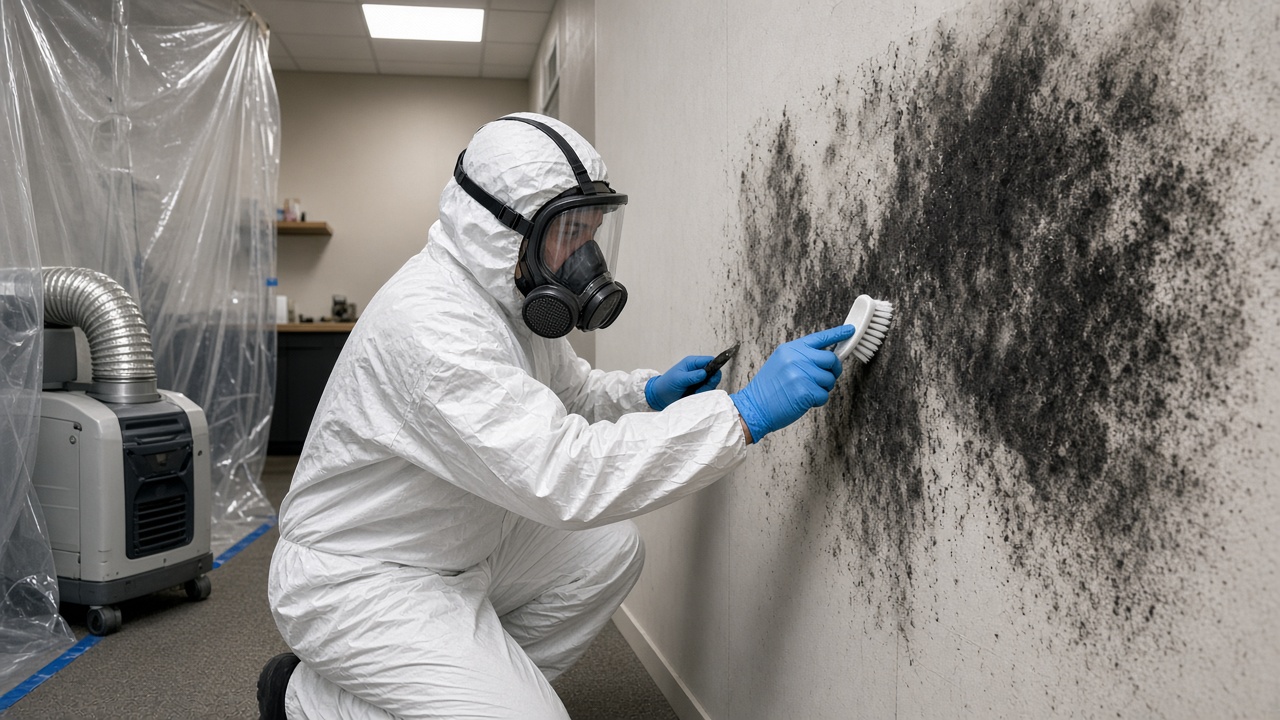
Our process starts with a thorough inspection. We locate the mold source, identify moisture entry points (often roof seams along Baldwin Street or HVAC condensation issues), and assess how far contamination has spread. We photograph and document everything for your records and insurance if needed. Once we have a clear picture, we contain the affected zone with negative pressure, remove contaminated materials safely, and apply EPA-approved treatments.
The final step is addressing the moisture source. Whether it's a gutter backup near Highway 24, an HVAC leak, or foundation seepage from seasonal runoff, we fix or recommend the fix. We also advise on humidity control and ventilation to prevent recurrence. After remediation, we provide you with a written clearance and protocols for ongoing monitoring. You return to normal operations knowing the problem is solved, not just hidden.
Dispatch & Field Operations for Woodland Park
How Restoration King manages containment, removal, and moisture-source fixes for mold growth for businesses across Woodland Park and Teller County.
- On-site work: IICRC-trained mold inspection and moisture detection
- Containment setup with negative: pressure and HEPA filtration to protect unaffected areas
- Colorado Springs Headquarters: Emergency crews dispatch from our Colorado Springs headquarters (view on Google Maps) — serving businesses from downtown Woodland Park and Ute Pass.
Need residential mold removal & remediation in Woodland Park instead?
Mold Inspection & Assessment
Our IICRC-trained technicians inspect your facility methodically. We check common moisture hotspots—HVAC systems, roof penetrations, basement or crawl-space seepage, and window condensation—and use moisture meters to detect hidden dampness in walls and under flooring. For a Woodland Park property manager overseeing multiple units or a retail owner on downtown Woodland Park's main drag, we provide a detailed written report that prioritizes which areas need immediate remediation and which need preventive monitoring.
We also assess whether mold exposure poses an occupational health risk to your tenants or employees. If air quality is compromised, we recommend temporary relocation or staggered remediation schedules to minimize disruption. Every inspection includes a moisture-source diagnosis, so you know exactly what to fix to prevent the problem from returning after we leave.
Use this checklist to evaluate your Woodland Park facility and track our remediation steps.
- Identify visible mold spots, staining, or musty odors in offices, restrooms, break rooms, and storage areas
- Check HVAC returns, ductwork, and filter condition for mold or moisture buildup
- Inspect roof seams, flashing, and gutter condition—especially critical after Ute Pass winter runoff
- Examine basement/crawl space for standing water, seepage, or efflorescence on walls
- Test humidity levels in occupied spaces (target: 30–50% for commercial environments)
- Verify window seals and door frames for condensation or water tracks
- Review maintenance logs for prior water intrusions or HVAC issues
- Document tenant complaints or sick-leave patterns that may correlate with air quality
- Confirm containment protocols before remediation work begins (negative pressure, HEPA filtration)
- Obtain post-remediation clearance testing and air quality report
- Schedule follow-up moisture monitoring at 30, 60, and 90 days
- Plan gutter and drainage improvements along Highway 67 or Baldwin Street property lines if needed
After remediation, keep this checklist and our clearance report in your property file. Annual inspections before Teller County wet seasons help you stay ahead of mold risk.
What's Included in Mold Remediation
- IICRC-trained mold inspection and moisture detection
- Containment setup with negative pressure and HEPA filtration to protect unaffected areas
- Safe removal and disposal of contaminated materials per EPA guidelines
- Moisture-source repair or repair recommendations (roof, gutters, HVAC, foundation)
- Post-remediation air quality testing and clearance documentation
- Humidity monitoring and preventive maintenance plan
- Written report and photos for insurance, property records, and tenant disclosure
We handle mold remediation as a complete job—not just removal, but fixing the cause so it doesn't return and proving the space is safe for your workforce.
Related situations in Woodland Park
Woodland Park Commercial Mold Removal & Remediation FAQ
How quickly can you inspect our Woodland Park facility?
We respond to urgent mold calls the same day in the Woodland Park and Teller County area. For non-emergency inspections, we typically schedule within 2–3 business days. Call us at (719) 282-0997 to discuss your timeline.
Can you do the work after hours so employees aren't disrupted?
Yes. We can work evenings, weekends, or during low-occupancy times if needed. Containment also means air quality stays protected during remediation, but many property managers prefer off-hours access for peace of mind.
What causes mold growth in mountain buildings like ours in Woodland Park?
Teller County's elevation, heavy snow, and spring snowmelt create persistent moisture. Roof leaks, ice dams along Highway 24, gutter overflow, and HVAC condensation are common culprits. Mountain air also holds moisture longer in poorly ventilated spaces. Our inspection pinpoints your specific source.
Do we need to notify tenants or disclose the mold problem?
Colorado law requires landlords and property managers to disclose known mold or water damage to tenants. We provide you with documentation that protects you legally and helps you communicate transparently. We recommend honesty and a clear remediation timeline—it builds trust and avoids legal exposure.
What happens if mold returns after you finish?
If moisture seeps back in because the source wasn't fixed, mold will return. That's why we address both the contamination and the moisture problem. We also provide a monitoring plan so you catch early signs before a full remediation is needed again.
Is the space safe for employees to work in during remediation?
Containment with negative pressure and HEPA filtration protects unaffected areas, but occupants should not work in the containment zone. For small, localized jobs, affected areas can be isolated easily. For larger mold, we recommend temporary relocation of that department or staggered schedules. We'll advise you based on scope and your facility layout.
Nearby communities
- Commercial Mold Removal & Remediation in Colorado Springs
- Commercial Mold Removal & Remediation in Fountain
- Commercial Mold Removal & Remediation in Security-Widefield
- Commercial Mold Removal & Remediation in Stratmoor
- Commercial Mold Removal & Remediation in Fort Carson
- Commercial Mold Removal & Remediation in Monument
- Commercial Mold Removal & Remediation in Falcon
- Commercial Mold Removal & Remediation in Peyton
Restoration King — Colorado Springs
Serving Teller County and nearby Front Range communities.
Schedule Your Mold Inspection Today
Call (719) 282-0997 or request an appointment. We'll assess your Woodland Park or Teller County facility, identify the moisture source, and deliver a clear remediation plan. Same-day urgent response available.