
El Paso County · Commercial · Flood & storm cleanup
Security-Widefield Commercial Flood Cleanup
Flood hits your office or retail space in Security-Widefield—we extract water, remove debris, and dry it fast to reopen.
Our Flood Cleanup Process
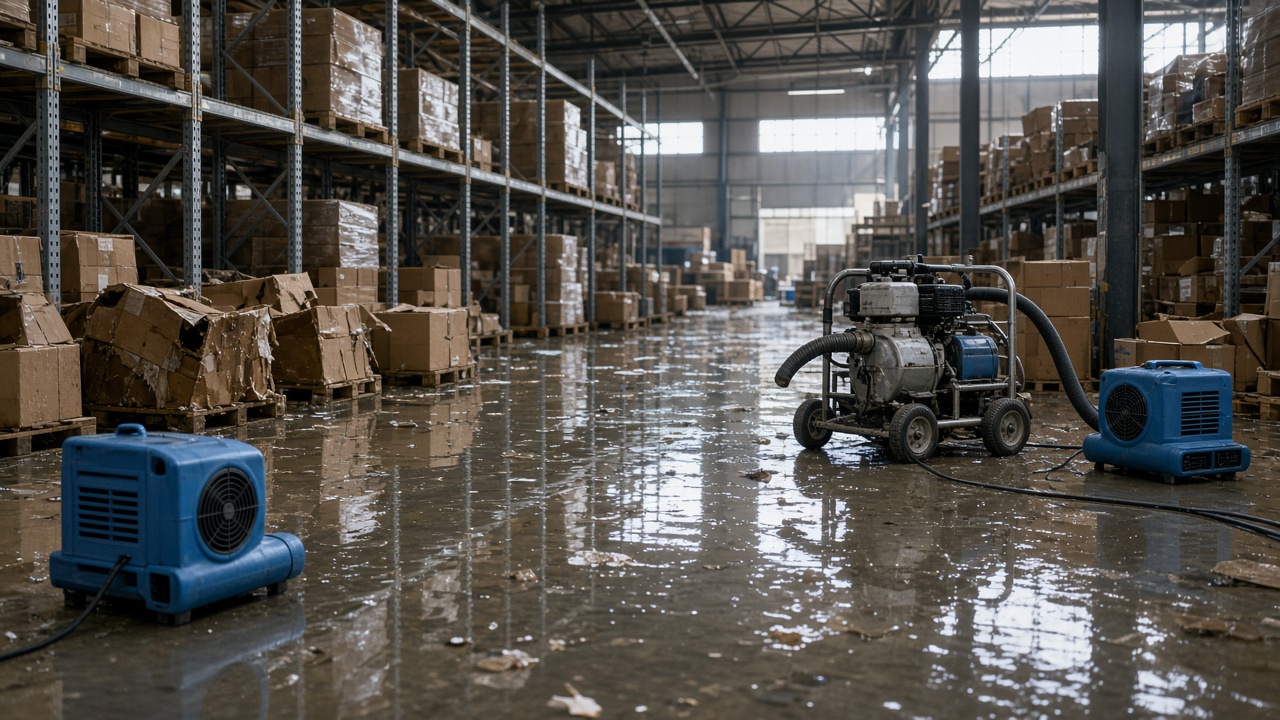
When storm or sewage water floods your commercial space, every hour offline costs you. We show up fast with truck-mounted extraction equipment, stop the standing water, and start drying before mold takes hold. Our team removes saturated materials, clears debris from your floor and loading areas, and positions industrial dehumidifiers and fans to pull moisture out of walls and subflooring. We work around your schedule—early morning, late evening, or after-hours—so your tenants and operations feel the smallest possible impact.
We begin with a full walkthrough of affected areas: offices, break rooms, storage, and mechanical spaces along Fontaine Boulevard and throughout the Fountain-Fort Carson corridor. We document damage for your insurance claim and identify which materials can be salvaged versus what needs removal. Once we've mapped the scope, extraction starts immediately using our largest capacity pumps and vacuums.
Drying takes three to seven days depending on water volume, humidity, and materials affected. We monitor moisture levels in drywall, concrete, and subflooring daily, adjusting equipment placement to target hidden pockets of wetness. Throughout the process, we keep you informed on progress and expected facility reopening. El Paso County weather—especially spring runoff—can hit fast; we're ready to mobilize crews same-day across Security, Widefield, and surrounding commercial districts.
Dispatch & Field Operations for Security-Widefield
How Restoration King manages storm and sewage flood extraction, debris removal, and drying for businesses across Security-Widefield and El Paso County.
- Same-day or next-day emergency: response and water extraction using truck-mounted and portable equipment
- Moisture mapping and daily: monitoring to catch hidden wet spots in walls, subfloors, and mechanical spaces
- Colorado Springs Headquarters: Emergency crews dispatch from our Colorado Springs headquarters (view on Google Maps) — serving businesses from Security to Widefield and Fountain-Fort Carson corridor.
Need residential flood cleanup in Security-Widefield instead?
Damage Assessment & Extraction Start
Our first step is a thorough inspection of all flooded areas, including spaces behind equipment, under carpeting, and in crawl spaces. We use moisture meters to measure water content in materials and identify secondary damage risk—soft drywall, warped subflooring, electrical hazards. We take photos and detailed notes for your insurance adjuster and prepare a written scope of work so you know exactly what gets removed and what we're drying in place.
Once assessment is complete, we deploy extraction equipment immediately. Truck-mounted systems handle large volumes quickly; portable vacuums reach tight corners and elevated surfaces. We remove standing water from carpeting, tile, and concrete, then begin air movement to prevent mold colonization. If sewage is involved, we follow EPA and Colorado health department protocols for contamination cleanup, including antimicrobial treatment of affected hard surfaces.
Use this list to prepare your facility and track our work during water extraction and drying.
- Document water entry point and any visible damage with photos for insurance
- Turn off HVAC and electrical systems in affected zones (or let us assess first if you're unsure)
- Clear high-value inventory, documents, and equipment from the flood zone
- Note which doors and access points are flooded so we plan crew entry and equipment routes
- Identify any hazardous materials (chemicals, cleaning supplies, electrical equipment) in the wet area
- Plan for after-hours or weekend extraction if your facility must stay operational during business hours
- Prepare a list of tenant contact info if it's a multi-unit commercial building
- Remove small movable items (chairs, trash cans, office supplies) so we can access all floor surfaces
- Keep staff and tenants out of the wet zone until we've confirmed electrical safety and mold risk is low
- Schedule a final walkthrough with us before declaring the space ready for re-entry
- Preserve any damaged materials we've removed in case your adjuster wants to inspect them
- Request our invoice and damage report within 24 hours so your insurance claim moves quickly
We'll guide you through each of these steps. Call us the moment water appears—the faster we start, the less total damage and the quicker your reopening.
What's Included in Our Flood Cleanup
- Same-day or next-day emergency response and water extraction using truck-mounted and portable equipment
- Moisture mapping and daily monitoring to catch hidden wet spots in walls, subfloors, and mechanical spaces
- Debris removal—wet drywall, saturated insulation, and contaminated materials hauled away and disposed of properly
- Industrial-grade air movers and dehumidifiers positioned throughout your facility for rapid drying
- Antimicrobial treatment of hard surfaces if sewage or contaminated water is involved
- Documentation and photos for your insurance adjuster, plus a written scope of work before we begin
- Flexible scheduling: early morning, evening, or weekend extraction to minimize business disruption
Our goal is to get your office, retail floor, or storage space dry, safe, and ready to use again as fast as possible. We handle the heavy lifting so you can focus on operations.
Related situations in Security-Widefield
Water Damage Restoration
Stop the water and dry the structure before secondary damage.
Mold Removal & Remediation
Containment and removal when moisture turns into mold.
24/7 Emergency Response
After-hours crews for water, fire, and mold emergencies.
Odor Removal
Neutralize smoke, sewage, pet, and musty odors at the source.
Security-Widefield Commercial Flood Cleanup FAQ
How quickly can you get here after I call?
We aim for same-day dispatch in Security-Widefield and El Paso County. Call (719) 282-0997 the moment water appears. If it's after hours, our emergency line routes to on-call crews who can mobilize within a few hours.
Can you work around our business hours so tenants and staff aren't disrupted?
Yes. We schedule extraction and drying equipment placement for early morning before you open, evenings after hours, or weekends if needed. We'll coordinate access with you in advance so nobody's surprised by our trucks on Fontaine Boulevard or Widefield Boulevard.
Do you handle sewage backups, or just storm water?
We handle both. Storm water and sewage flood cleanup are different—sewage requires antimicrobial treatment and strict disposal protocols. We follow Colorado health department and EPA standards for contaminated water. Let us know what type of water you're dealing with when you call.
What happens if water got into our HVAC system or electrical panels?
Stop—do not turn those systems back on. Tell us immediately when you call. We'll assess them first and let you know if a licensed electrician or HVAC tech needs to clear them before you restart. Your safety and facility integrity come first.
How long does drying usually take, and how will I know when the space is safe?
Typical drying takes three to seven days depending on water volume and materials affected. We monitor moisture levels in drywall, concrete, and subflooring daily. When moisture reads normal and there's no mold smell, we'll give you the all-clear. We'll also provide a final report for your insurance and property records.
Will this work be covered by our commercial property insurance?
Most flood damage claims are covered by business property insurance, but we recommend checking your policy first. We provide detailed photos, damage reports, and invoices to make your claim process smooth. Your adjuster may want to inspect removed materials—we keep those available if you ask.
Nearby communities
Restoration King — Colorado Springs
Serving El Paso County and nearby Front Range communities.
Water in Your Building? Call Now.
We dispatch crews same-day across Security-Widefield and El Paso County. Extraction, drying, and debris removal—all scheduled to get you back open.